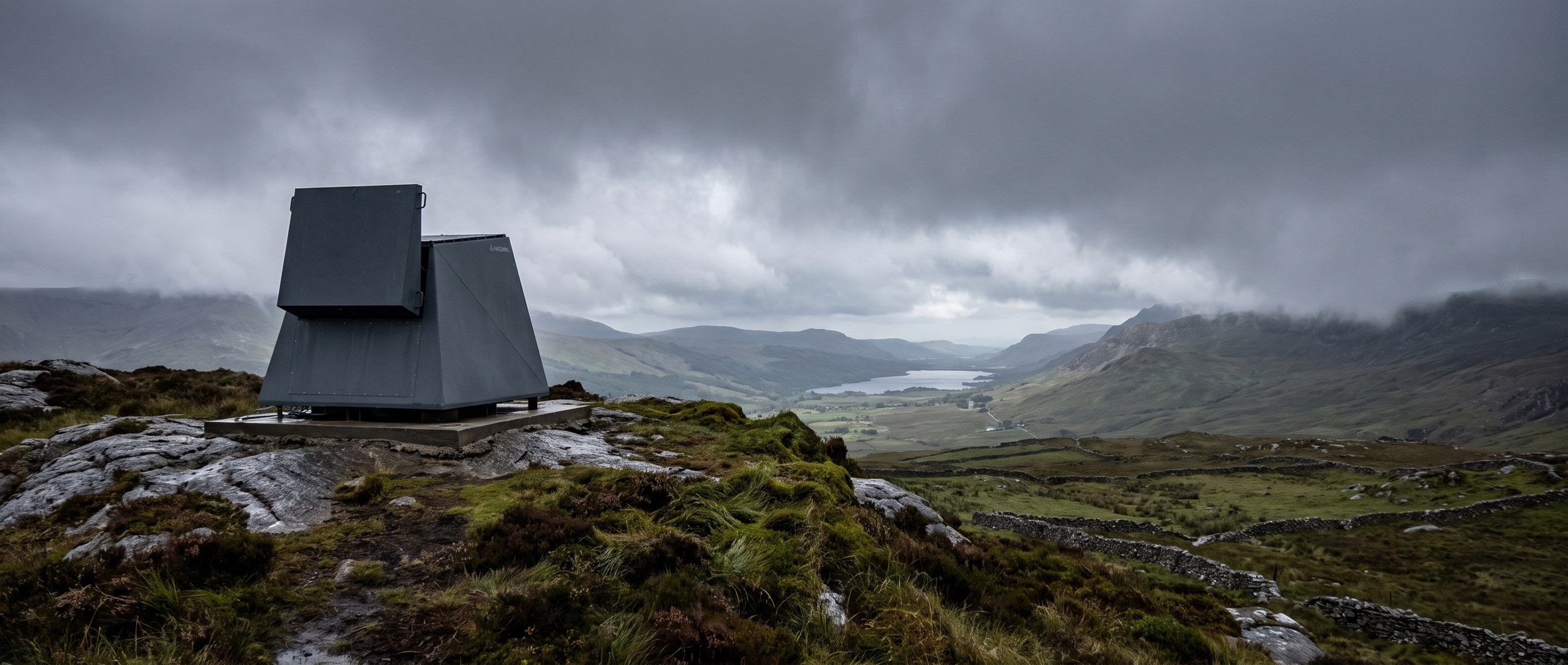
A grid of autonomous aircraft held on high ground across the country, so every emergency call has eyes overhead before the first vehicle moves.
Reaching nine kilometres inside ninety seconds and holding station once it gets there rules out a multirotor. Speed on a multirotor is bought with attitude, and endurance collapses at exactly the point the mission needs it.
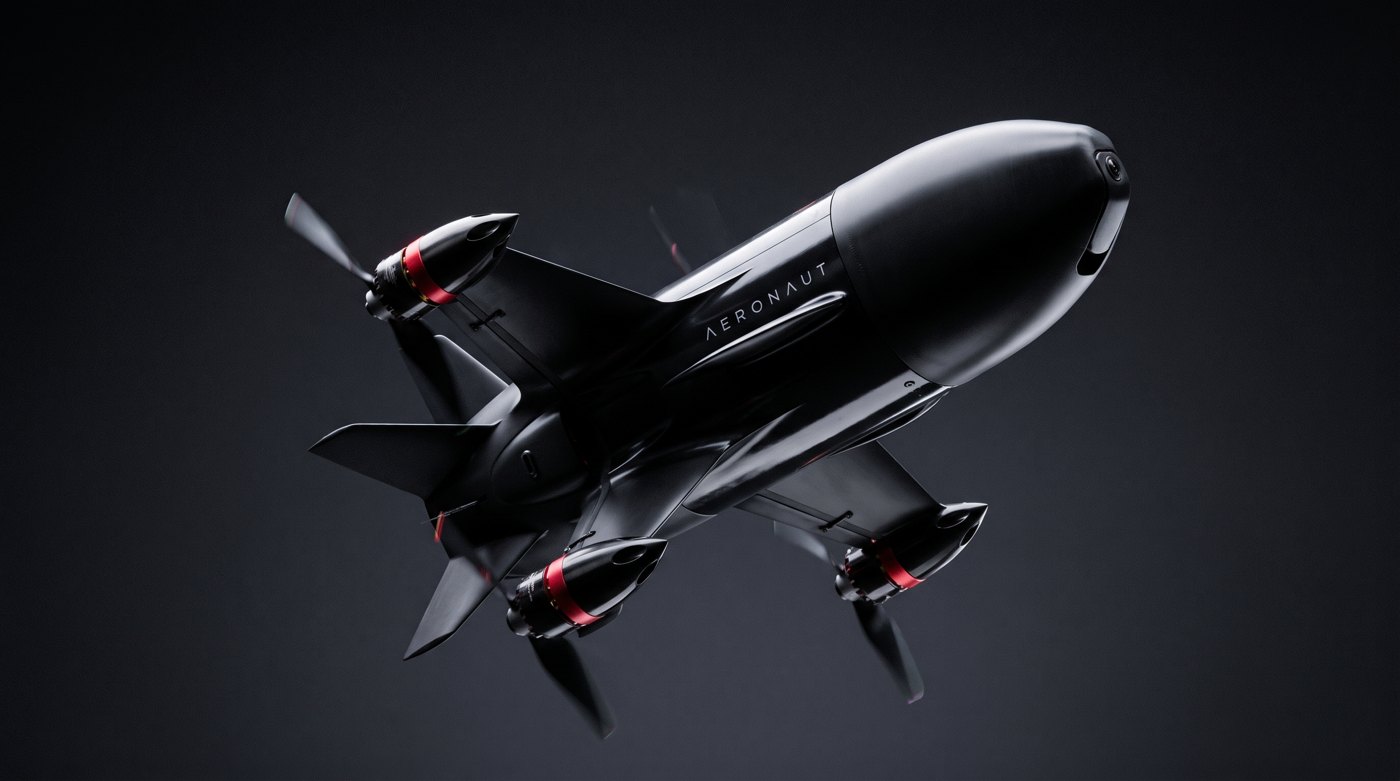
The response airframe is a tilt-rotor. It lifts vertically out of the box, transitions to wing-borne flight for the transit, and returns to hover over the scene. Two sit in every station, charged, sealed and ready.
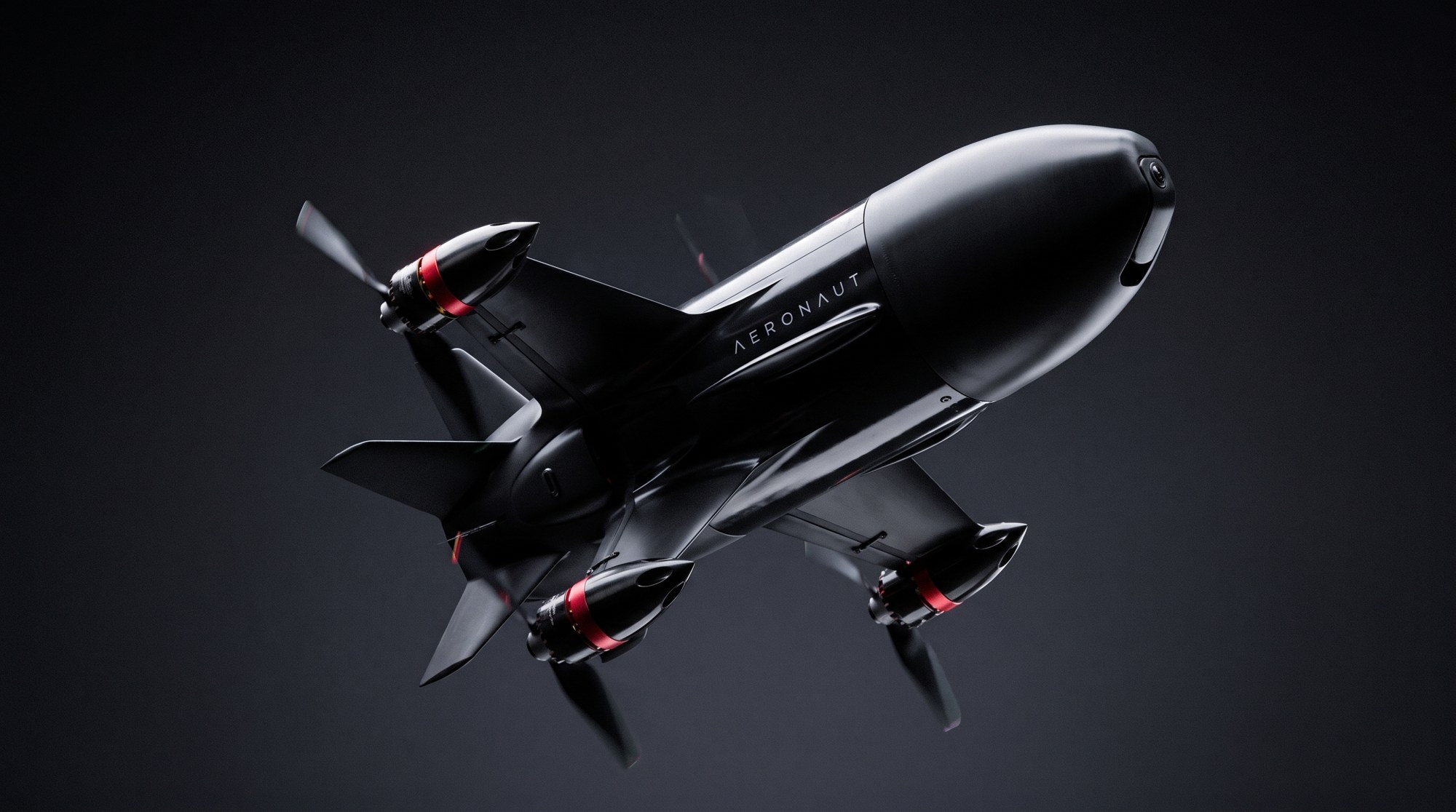 Concept render. Airframe class, not a production design.
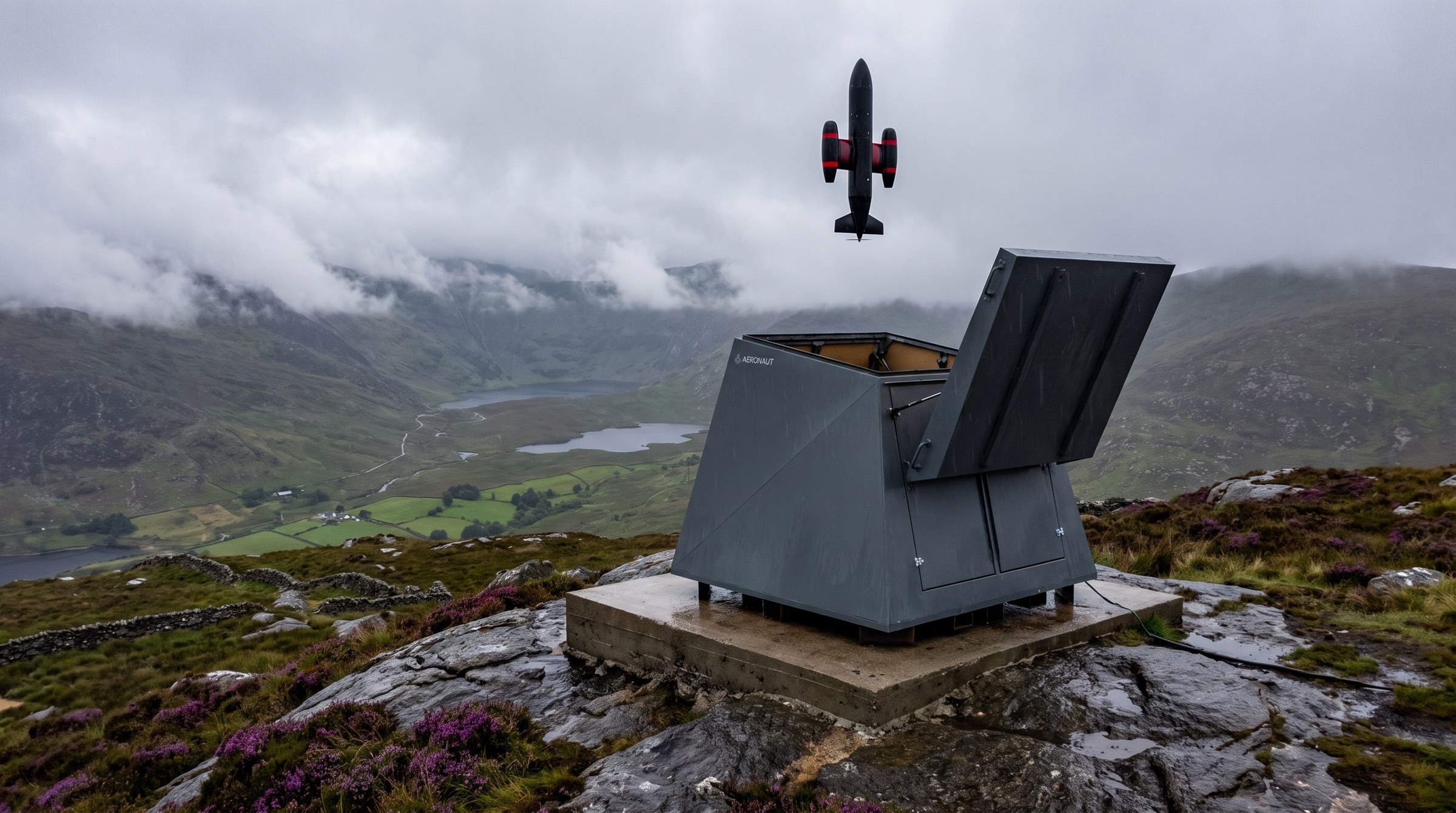
The Republic is 70,273 square kilometres. At 360 km/h, allowing thirty seconds to open and climb, an aircraft reaches nine kilometres inside two minutes. Tiled on that radius, the mainland takes 329 stations.
Ten thousand simulated incidents put the median response at one minute twenty nine, with 93.8 per cent of the country reached inside two minutes and all of it inside four.
An Aeronaut aircraft navigates, launches, transits, finds, identifies, holds station and returns on its own, including with every link down. That is a navigation problem, and it is solved on the aircraft.
Anything beyond observation requires an authenticated human decision that the aircraft cannot generate, cannot infer and cannot proceed without. If the link is down, the answer is no. That separation is built into the architecture, not written into a policy.
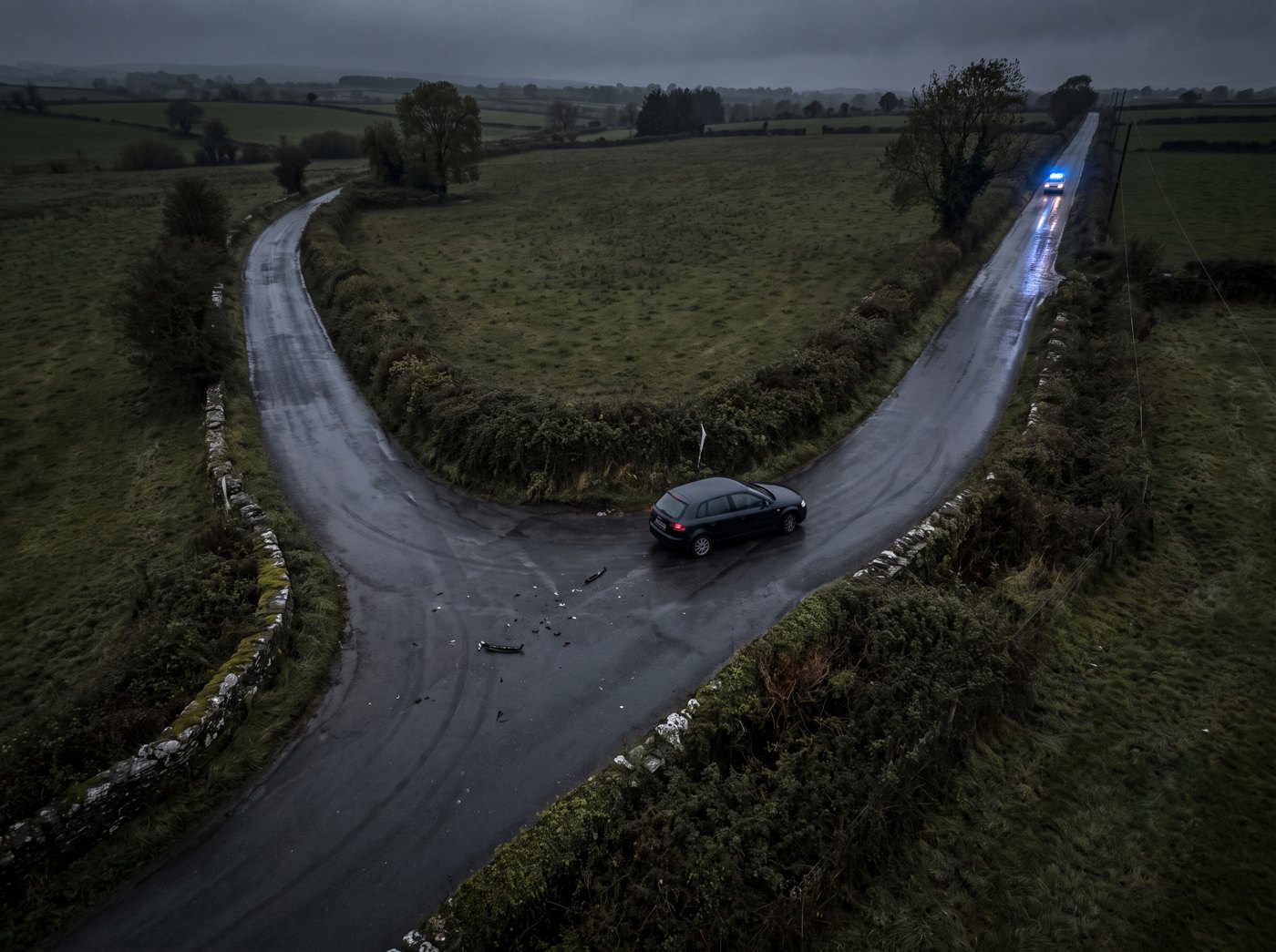
The dispatcher stops working from a caller's description. Vehicles, casualties and access are known before the first unit is committed.
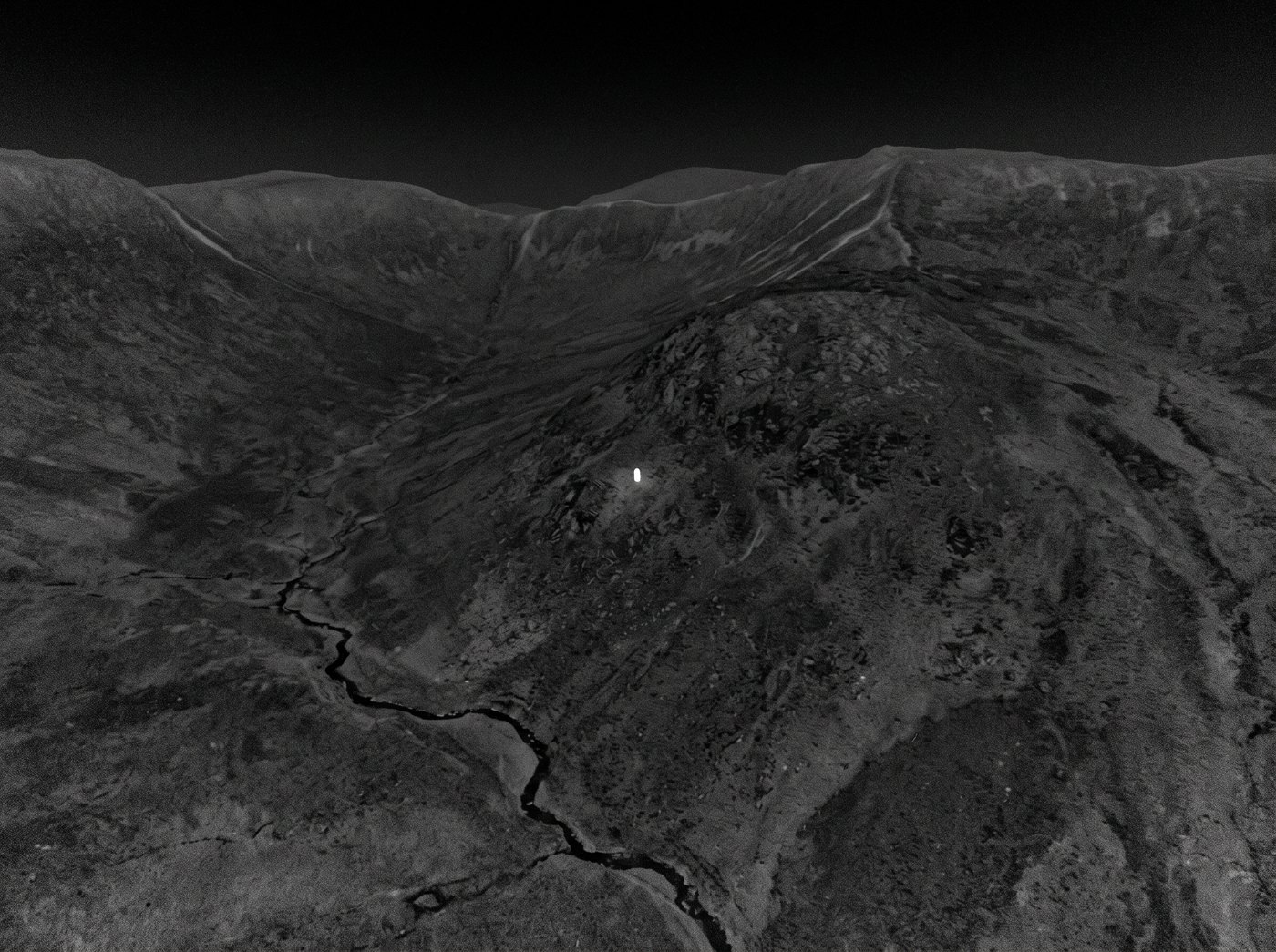
A search area grows with the square of elapsed time. Thermal over the last known point while ground teams are still mustering.
Given a track from any source, put an aircraft alongside it and return a visual identification. Detection is the constraint, not response.